.jpg?rev=525e8ecf3dd643ed951507bbc7794b52&w=3200&hash=0E6BE169AECD35AB5FB6E65686D6BA51)
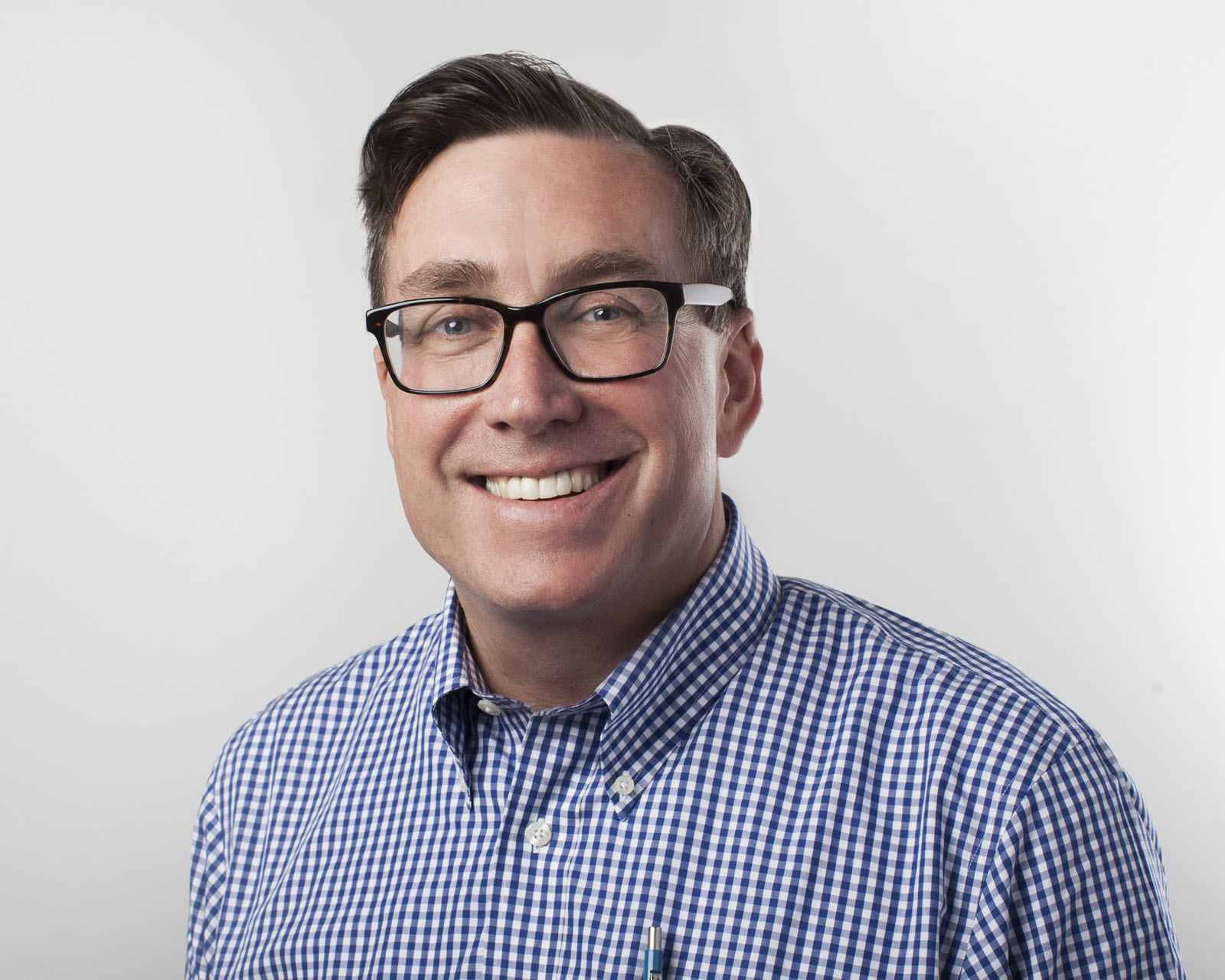
With enormous gratitude, I'm writing to share that I'll be stepping down as K-12 director at the beginning of April 2026, after nearly a decade in the role. The timing reflects where I see our strategy. The K-12 team has built significant momentum toward improving math achievement via high-quality curriculum, professional learning, data-driven systems, R&D and digital tools. As emerging technologies like AI create new opportunities for what is possible in teaching and learning, and we continue to apply these innovations to math improvement, the time feels right to hand the reins to a new leader who can shape this next chapter and continue accelerating impact heading toward the foundation’s 2045 closure.
I'm genuinely thrilled about what this transition unlocks—for the foundation, for the field, and most of all, for students.
Will I always be a card-carrying member of the Gates Foundation family? Unequivocally, yes. I've been part of the foundation's work for 25 years in one form or another, and I'm not turning in my membership card anytime soon. But things evolve—and that's good.
First, A Little History. I received my first Gates grant three months into my tenure at New Visions for Public Schools in New York City in 2000. With Gates as an anchor funder, we launched the New Century High Schools initiative—replacing large, struggling high schools with smaller, themed ones focused on rigor, relevance and relationships. We helped create 99 district schools and seven charters. Thousands of teachers, students, and community organizations reimagined high schools across the city. I visited one of those schools just weeks ago, and the work remains alive and vital.
Success here is not anecdotal. MDRC's randomized controlled trial—based on NYC's lottery admissions process—followed over 21,000 students across more than 105 small schools. The results: students at small high schools graduated at a rate 9.4 percentage points higher than comparable peers, and these effects held across nearly all subgroups, including special education students. Small high schools also increased postsecondary enrollment by 8.4 percentage points—at 14 to 16 percent lower cost per graduate. Evidence like that, replicated across seven cohorts, is rare in education. That chapter laid the groundwork for everything I’ve tried to do at the foundation: never losing sight of students, and especially those who face the biggest barriers to their success, learning from the field, and scaling what works.
Our Work Together. At the foundation, since 2016, I've had the chance to broaden my view and learn from all of you—and from remarkable colleagues. I'm incredibly proud of what we've accomplished together.
In our early years, we worked with you to build a network of schools via our Networks for School Improvement initiative, reaching nearly 700,000 students and tested continuous improvement approaches in action – and weathered COVID protecting some of this nation's most vulnerable children in the process. Full evaluations come out next year, but early findings confirm that data-driven improvement science is critical as schools manage variation and work to strengthen academic and social-emotional outcomes. Ensuring that all students are academically “on track” by the end of 9th grade is particularly important.
We also invested heavily in inclusive R&D across a variety of digital and non-digital issues –now taking the form of the AERDF initiative, the AIMS and ENCORE Collaboratives – tackling endemic problems in education alongside teachers and students. And work on teacher residencies and strategic staffing are having an enormous impact, attracting and preparing teachers going forward. That work grows more promising with each passing year.
Building on this work, the K-12 team shifted our focus exclusively to mathematics five years ago. Math is both a gatekeeper and a launchpad—shaping who gets access to advanced coursework, STEM careers, and economic opportunity. But it's often more than that. Math narratives and the availability of high-quality instruction shape how students see their own intelligence and agency. Too often, those narratives have held millions back—in math and in life. The foundation's commitment here is exactly right, and I'm thrilled that mathematics, instructional materials, digital tools and professional learning will remain central to the strategy going forward.
What's Ahead? Bill Gates's decision to accelerate giving before ultimately winding down the foundation in 2045—with U.S. education as a continuing priority—is as necessary as it is exciting. Education is at the cusp of a transformation unlike anything we've seen. AI will be the biggest accelerator of my career. In collaboration with partners, the K-12 strategy will continue to work on open datasets, math knowledge graphs, multimodal evaluation, and tutoring frameworks that reward real pedagogy; we’ll continue pushing for greater accuracy and safety, and ensuring that these tools are seamless, user friendly, and work effectively in a variety of contexts and for a variety of learners. The foundation will continue, among other things, to explore ways of using technology to give every student, especially those behind grade level, access to a tutor and give teachers back precious time in their stressful weeks and more space to engage students directly. Done right, AI doesn't replace teachers – it supercharges them. And it can personalize and accelerate learning beyond what we previously imagined.
That's why now feels like the right moment to help find a new leader for the foundation's final 20-year chapter. There's never a finish line in education. We're in a relay race—passing the baton from person to person, institution to institution, generation to generation. The best time to hand that baton off is when you're ahead, running hard and fast, to the person who can lead the next leg. That is where the K-12 team is right now, a moment of strength. With Bill's strong support, our investments in mathematics will continue and evolve as we learn more, as AI advances, and as we keep partnering with all of you on this journey.
Meanwhile, a little closer to home, you’ll find me in New York City after April 3 – replacing planes with the subway and hanging out with New York City advocates and educators. After 40 years in this work, I'm excited to support the foundation through this transition before I rejoin your ranks, and yes, get back to writing grant proposals and working on the front lines. And, honestly, to take some time to hike the Via Francigena, a dream since I was an altar boy in Oshkosh, Wisconsin!
It has been such a privilege to work with each and every one of you. This work is hard. It demands patience, persistence, and a willingness to take risks to get it right. As partners in this work, you've shown up year after year, not for recognition, but because you believe that every student deserves a real shot. I've learned more from you than I can say. I carry your insights, your questions, and your relentless commitment with me into whatever comes next. I hope I have not let you down.
I can never say this enough: To all the partners who made this work possible – practitioners who stayed late and came early, intermediaries who bridged the impossible gaps with speed and agility, curriculum designers who sweated every lesson, engineers who built and rebuilt digital products until they worked—thank you. You are the reason this time has been so precious to me and the entire team. That will not change going forward.
To borrow from Marge Piercy's extraordinary poem, To Be of Use, "The people I love the best / jump into work head first / without dallying in the shallows…" That's you. That's always been you. And that won’t change. Let's go!
Bob Hughes
Director, K-12 Education