
A few months ago, I wrote about why this moment feels different — why the combination of a finite window before the Gates Foundation’s closure in 2045 and a genuinely transformative technology has sharpened how we're thinking about our education work. I committed we'd share more about where we're headed. Today, I want to make good on that commitment.
Today, we're introducing the U.S. Program's long-term strategy to help millions more Americans earn credentials that open real economic doors.
With the foundation's planned closure in 2045, we have roughly 19 years to make this work count. That urgency is clarifying. Every investment, every partnership, every bet we make has to contribute to moving the needle for learners, now and in the future.
Why education — and why now
Let me start with what hasn't changed: our fundamental conviction that education is one of the most powerful levers we have for economic mobility in this country.
But here's the hard truth: our education system isn't delivering on that promise. More than 6.7 million students in grades 3–8 are more than one grade level behind in math. Nearly a third of college students receive a D or F grade or withdraw from introductory first-year college courses – the very courses they need to get to a credential. Transfer students lose an average of 43% of their previously earned credits when they change institutions. These aren't data points in isolation. They represent millions of people whose momentum stalls, and whose chances of climbing the economic ladder diminish as a result.
The landscape around learners is also shifting: over the next decade, most jobs will require some form of postsecondary education or credential, and advances in technology are reshaping how people learn, work, and navigate their careers.
What has also changed is what's now possible — and what's at stake if we don't shape it. AI is already in education. According to Gallup, 60% of K-12 teachers used an AI tool for their work this school year, but only 18% got any formal guidance on how to use it.
The question is whether AI bends toward educators and learners or away from them – whether it is designed to meet their needs and amplify the best of teaching and learning while maintaining clear safeguards and privacy, or whether it will be a tool that erodes critical thinking and the relationships at the heart of education. I think those questions will largely be answered in the next few years, and the foundation is committed to working with partners to bend the arc in favor strong relationships, quality learning and best in class privacy protections.


A focus on the moments that matter most
At the core of our strategy moving forward is a fairly simple insight: research shows that learners often lose momentum on their path to a credential of value at key moments and transition points. These are also moments that are highly predictive of long-term success.
So we're organizing our work around four of those moments:
Succeeding in math on the road to Algebra I. Students who aren't on track in math by 9th grade are less than half as likely to graduate from high school on time. This milestone is one of the most consequential in a student's entire academic journey — and too many students never get the support they need to clear it. When teachers have access to high-quality tools and supports that strengthen instruction and respond to individual student needs, more students can confidently learn foundational math — positioning them for success in advanced coursework and beyond, and giving learners more choices and agency about their future.
Navigating the transition from high school into and through college. While the national average student-to-counselor ratio in many states is below the recommended target of 250:1, progress hasn’t reached every student equally. Students at high-caseload schools see lower rates of college advising and potential first-generation students remain the least likely to receive the advising support they need. Research shows that students who connect one-on-one with a counselor are 3 times more likely to attend college. There is clearly a need among learners for more individual support in high school, and also once they are enrolled in postsecondary. Strong college advising is critical to helping students persist on their path to a credential of value.
Passing critical first-year college courses. As many as 30% of college learners receive a D or F grade or withdraw from introductory college courses in calculus, chemistry, and statistics, among other subjects. In math alone, that's nearly 1 million failed course attempts per year. This is not because they can’t do the work, but because courses aren’t consistently designed to support learning, and professors aren’t supported to facilitate instruction that more directly meets the needs of their learners.
Making sure college credits count. Credit loss when changing colleges costs students real momentum – more than 40% of previously earned credits – and real money, adding between $2,700 - $5,500 in additional learner debt, per the Center for Higher Education Policy and Practice. We want learning to count, and we want students to be able to build on what they've already earned.
When learners clear these milestones, their chances of earning a credential of value increase dramatically. That's the throughline for learners and for our strategy.

What we're investing in
Our work is organized around two mutually reinforcing bets:
The first is strengthening the institutions and systems that support learners. Effective tools only work inside effective institutions – and supporting K-12 schools to implement coherent instruction and colleges and universities to holistically meet the needs of their students is among the hardest, most necessary work in education. Our decades of partnerships with K–12 districts and colleges have taught us that context matters enormously — what works in one community can't simply be dropped into another without support, infrastructure, and trust.
This means high-quality research and shared tools that give educators and leaders reliable evidence to act on; policy and advocacy that builds the environment for effective approaches to scale; and deep partnerships across K–12 schools and higher education that bring the right expertise together around shared definitions of student success. When these enabling conditions are in place, good ideas don't stay isolated in a single classroom or district — they reach the students who need them most.
The second is funding the tools and approaches — many of them technology-enabled — that can reach learners at scale and improve outcomes. That includes:
- Educator-led instruction that brings together high-quality curriculum, professional learning for teachers, and AI-enabled tools that keep students and teachers at the center of learning. A recent learning trip to NYC really brought this vision to life for me, which you can read about here. In working directly with schools, we will seek to understand the conditions and practices that drive learning acceleration. We will also continue to fund R&D to understand how tools can foster student engagement and motivation in and out of the classroom.
- Personalized advising tools that are available when students need them most, not only during office hours, and that help students understand their options and stay on the path of their choosing.
- Redesigned critical first-year college courses that improve how material is taught so more students engage, learn and pass — changing outcomes without lowering standards. Our support of REAL CHEM as a pilot is an example of what this looks like.
- Data and infrastructure that make credit transfer and other evidence of learning simpler, faster, and more equitable — building toward a system where all learning counts and learners can paint a comprehensive picture of their skills and experiences as they move through institutions and into the workforce.
I want to be clear about what this is not. We are not betting on any single product, platform, or technology company. We are investing in an ecosystem: the tools, the evidence, the institutions, and the infrastructure that together can support millions of learners.

How AI fits in the picture
I know that the conversation about the role AI should play in education is active in communities across the country. Parents are asking hard questions. So are educators. So are we.
Too many tools have been adopted without evidence they work, with inadequate attention to student data privacy, and with little accountability for learning outcomes. The most widely used AI tools, such as ChatGPT or Gemini were built for general audiences, not learners – early versions gave generic answers, didn't remember students between sessions, and still answer to no one for whether students actually learn.
We think the foundation has a role to play in changing that. We will hold ourselves and the field to a higher standard: evidence of impact, protected student data, and a commitment to student well-being. We believe AI should power learning — not replace the productive struggle that helps it stick. Teachers remain central. Caring adults must remain in the lead, not just in the loop.
This is more than a values statement. It's a strategic imperative. The foundation's credibility — and ultimately the work's impact — depends on AI being developed, evaluated, and deployed effectively in ways that communities can trust.

What success looks like — and by when
Our strategy is organized around five-year horizons, and we're setting concrete targets for the first of them: 2030.
By 2030, we want to see schools using coherent instructional systems and tools capable of supporting more than a year and half of student growth, helping teachers deliver strong instruction to help students catch up, keep pace, and get ahead.
By 2030, we aim for a 5-percentage point enrollment increase among first-generation learners.
By 2030, we want critical first-year college course pass rates for students using foundation-supported courseware to reach around 80%, while cutting in half the outcome gaps that that have historically left Black, Latino, Indigenous, and low-income students behind in these foundational courses.
By 2030, we want to increase the share of successfully transferred college credits from 32% to approximately 40% — making it meaningfully easier for students to build on what they've already earned.
These are meaningful milestones toward our larger ambition: to double the rate of growth of 18-to-34-year-olds attaining credentials of value, resulting in up to 10 million more learners achieving those credentials by 2045.
That is a number I hold onto — not as an abstraction, but as a reminder of what we could potentially unlock if we hit our 2030 goals. Not better systems for their own sake. More people with real opportunity. More families experiencing upward mobility. More young people able to choose the lives they want.

Looking ahead together
To drive this strategy, we have made changes to how our U.S. Program team is organized and structured, and are also implementing a set of leadership changes:
In January of this year, after 27 years at the Gates Foundation, I made the decision to step down as president of the U.S. Program. I will complete my transition from the role on August 31. This was not an easy decision, but it’s exactly the right one for me, and for the work. I have every confidence in the direction of the work and believe this is the right moment for new leadership to carry the vision forward.
Working alongside my foundation colleagues and our partners these past 27 years has been the privilege of a lifetime. Their dedication, insight, and generosity of spirit have shaped not only the work but have inspired me in ways I will carry with me long after August 31.
Patrick Methvin will serve as Interim President of the U.S. Program beginning September 1. Over 20 years working with the foundation and last 13 working at the foundation, Patrick has worked across K-12, Pathways, and Postsecondary, spanning everything from solution innovation to institutional improvement at scale to data infrastructure. He has been central to the development of our new strategy, and shares my enthusiasm for the work ahead. His demonstrated commitment to harnessing innovation in service of systems change and student success are well-suited to the moment we are in.
During this interim period, Dale Whittaker will serve as Interim Director of Postsecondary Learning and Navigation and Lewis Leiboh as Interim Director of K-12 Teaching and Learning. Both bring tremendous expertise to these roles and affirm my belief that leadership transitions are most effective when they are grounded in as much continuity as possible.
You can read more about these and other transitions across the division here.
At its core, this work is about a simple idea: a learner's future should be shaped more by their talent, effort, and aspirations than by the barriers they encounter along the way.
I believe this because education changed the trajectory of my own life.
Over the years, I have seen that same possibility reflected in conversations with students, families, educators, and community leaders across the country. What varies is not their potential but whether the systems around them provide the support and pathways needed to get there.
I am inspired every day by my colleagues and our partners who bring urgency, creativity, and conviction to this work. Their focus gives me confidence that we can meet this moment with the seriousness and hope it deserves.
If we get this right, the result will be more than higher completion rates or stronger educational outcomes. It will be a country where aspiration matters more than circumstance and where opportunity is within reach for far more learners.
That is the future we are working toward and one worth building together. I hope you will join us in that effort.
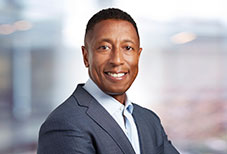
Allan C. Golston is the outgoing President of the U.S. Program at the Gates Foundation, a role he has held since 2006. He will step down on August 31, 2026.